
Health education

For 48 years, bilingual health education has been at the heart of MCWH's work.
Led by, for and with migrant and refugee women, our Health Education Program provides free, trusted health information in community languages across Victoria and Australia. The program is built on a simple belief: everyone has the right to clear, accurate and relevant information about their health so they can make informed decisions for themselves and their families.
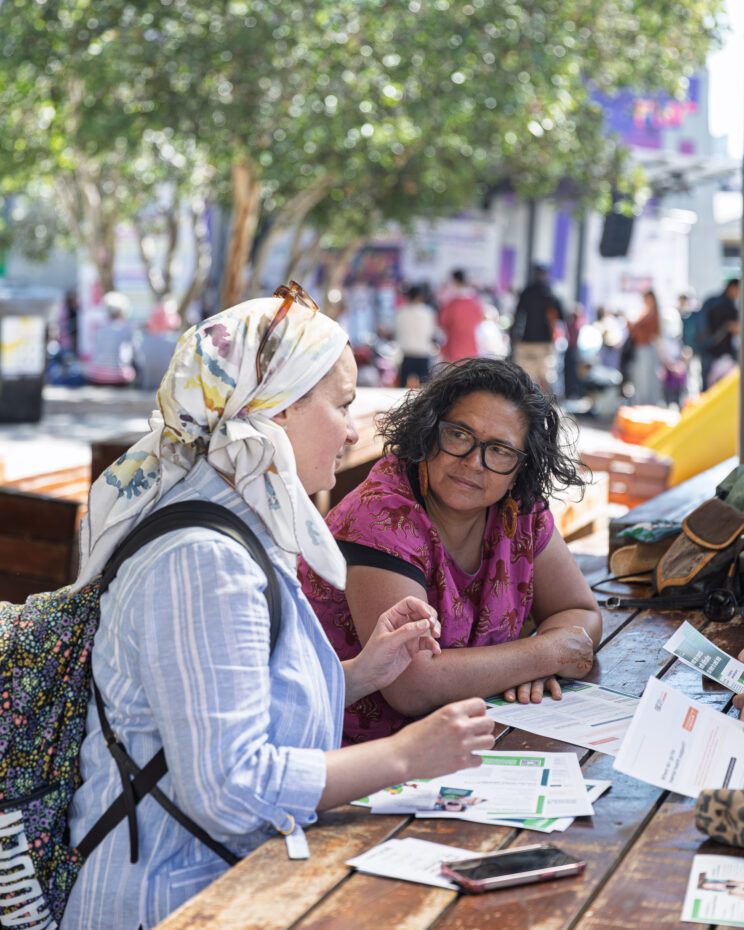
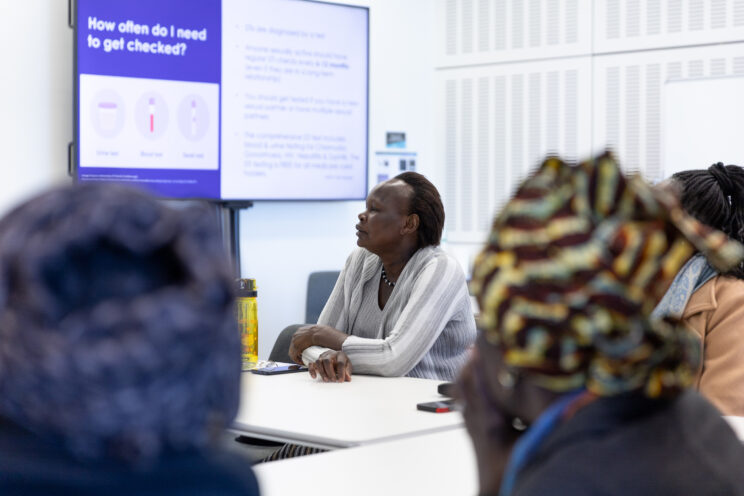
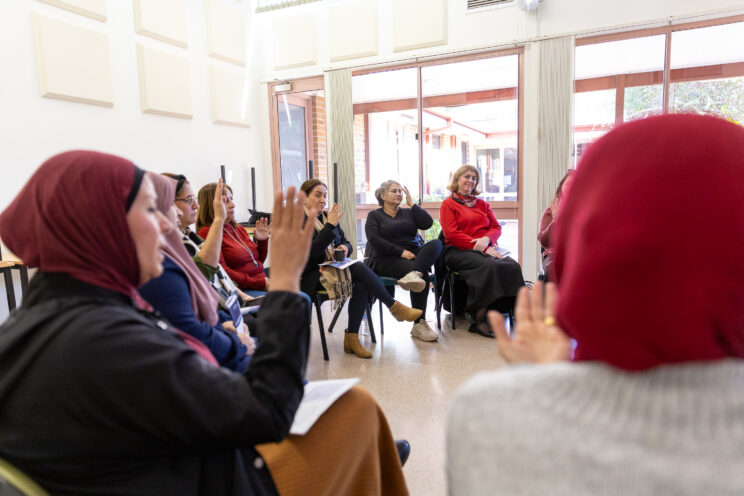
What makes our approach different is its flexibility. We bring health education directly to where people already gather and feel comfortable. Whether it's a neighbourhood house, place of worship, community centre, workplace, classroom, social group or online gathering, our educators meet people where they are, in the language they speak and in ways that respect their experiences and cultural context.
Every session is shaped around the needs of the group. Communities choose the topic, location, language and format that works best for them. This flexibility allows us to respond to emerging issues, community concerns and changing health priorities throughout the year while ensuring health information remains accessible and relevant.
A system built on trust is a system that works
MCWH's bilingual health education model is built on decades of experience working alongside migrant and refugee women.
Our health educators are trusted members of the communities they work with. They speak participants' languages, understand cultural contexts and create safe spaces where people can ask questions, share experiences and learn from one another. Unlike interpreters, health educators receive MCWH’s accredited training to explain complex health concepts, clarify information and support participants to better understand the health system and services available to them.
“We had a lot of training, like intensive trainings and assessments ...that helped us to build more confidence in delivering the health content” – BHE focus group
Our woman-to-woman, peer education approach recognises that health information is most powerful when it is shared in ways that value people's knowledge, experiences and choices. It is an approach grounded in empowerment, respect and trust.
Our woman-to-woman, peer education approach recognises that health information is most powerful when it is shared in ways that value people's knowledge, experiences and choices. It is an approach grounded in empowerment, respect and trust.
In-language resources always on hand
MCWH's bilingual health education model is built on decades of experience working alongside migrant and refugee women.
Our health educators are trusted members of the communities they work with. They speak participants' languages, understand cultural contexts and create safe spaces where people can ask questions, share experiences and learn from one another. Unlike interpreters, health educators receive MCWH’s accredited training to explain complex health concepts, clarify information and support participants to better understand the health system and services available to them.
Our woman-to-woman, peer education approach recognises that health information is most powerful when it is shared in ways that value people's knowledge, experiences and choices. It is an approach grounded in empowerment, respect and trust.
Life-saving information before it’s an emergency
"Through the program, I learned how to access appropriate health services. One night when my four-year-old son became unwell, I was able to stay calm and use an after-hours home visit doctor service instead of going to the emergency department. This saved time, reduced stress, and provided a more comfortable experience for both my child and our family” – Health education session participant
One of the strengths of MCWH's Health Education Program is that it reaches people who may otherwise miss out on important health information.
Migrant and refugee people often miss out on crucial information about Australia’s healthcare system, especially all the services that can prevent health needs before they become an emergency.
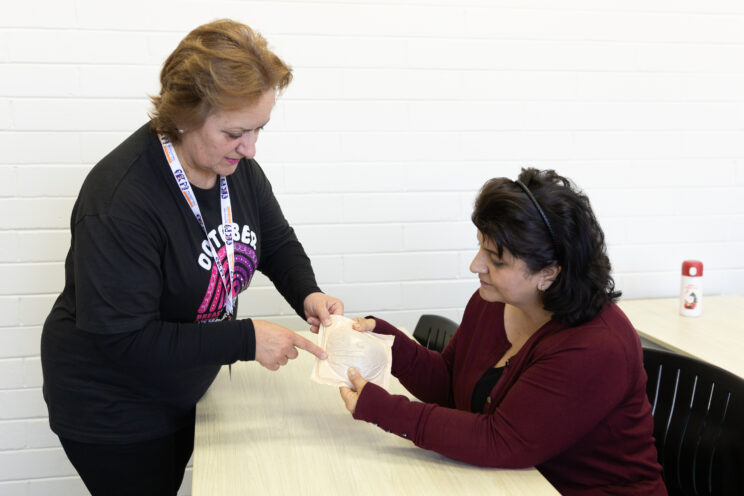
"I am at high risk of breast cancer, as my mother passed away from the disease and my sister is currently undergoing treatment. I am very grateful that this session helped me better understand my level of risk and the importance of monitoring for any changes, along with maintaining regular mammogram screenings every two years. I was also happy to share my story with the group to raise awareness about the importance of looking after our health, especially when there are unchangeable risk factors such as family history and genetics." – Health education session participant
For more than 45 years, communities across Victoria have continued to invite MCWH into their spaces because they know the information will be accurate, culturally responsive and delivered by educators who understand their experiences.
Health education is a crucial piece of our health system to make sure no one is left behind.
"This session was very important to me, as it was the first time I learned about the HPV vaccination. When we arrived in Australia, my GP didn’t mention it to me. After learning in this session how important the vaccine is for preventing most cervical cancers—especially since I’m still in my 20s and haven’t had any sexual relationships yet—I plan to make an appointment with my GP to ask about getting it. I truly feel that this session may have been life-saving for me". - Health education session participant
