
Policy and advocacy

Advocacy is central to MCWH’s work to improve the health and wellbeing of migrant and refugee women and gender diverse people.
Through policy submissions, consultations, research and sector engagement, MCWH works to ensure that the experiences and expertise of migrant and refugee communities inform the decisions, policies and systems that affect their lives.
This year, MCWH continued to advocate for more equitable health and social systems, contributing evidence and expertise to national conversations on healthcare access, gender equality and violence prevention.
Influencing national conversations on violence prevention
Submission to the Inquiry into the relationship between domestic, family and sexual violence and suicide
Highlighting the need for further research and improved data collection.
MCWH contributed to the Australian Parliament's Inquiry into the relationship between domestic, family and sexual violence (DFSV) and suicide, highlighting the need for greater recognition of the experiences of migrant and refugee women and gender diverse people by putting forward a submission and being invited by the Standing Committee on Social Policy and Legal Affairs to participate in a public hearing.
Our advocacy called for improved research and data collection to better understand the relationship between DFSV and suicide in migrant and refugee communities, as well as greater investment in culturally and linguistically responsive services and community-led prevention approaches.
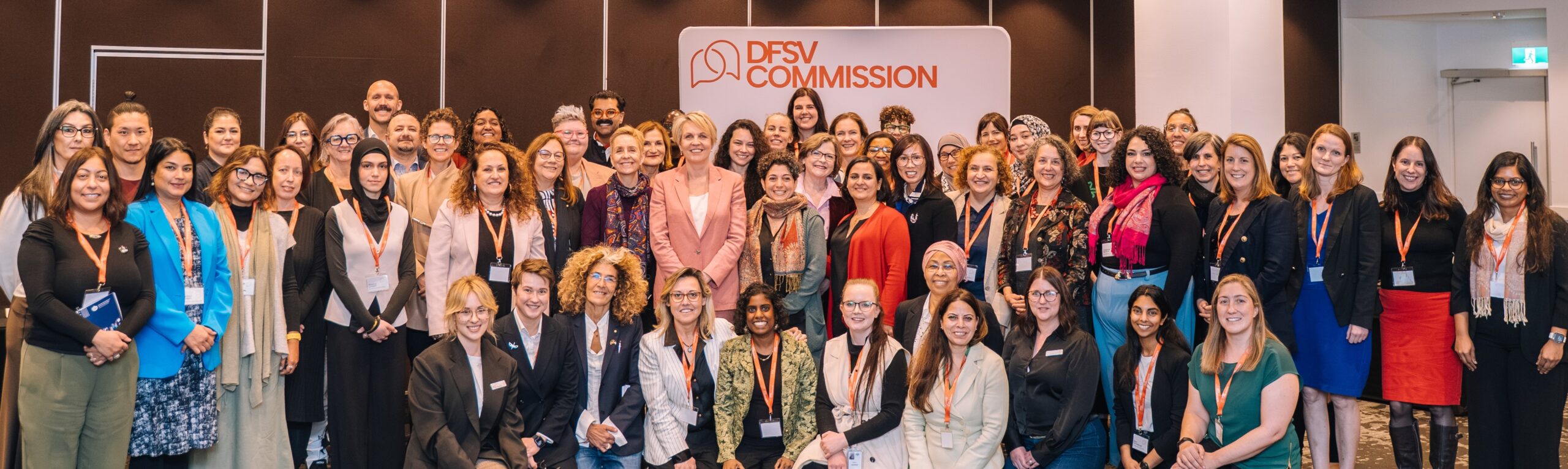
MCWH CEO Dr Adele Murdolo also participated in a national roundtable on prevention and early intervention in multicultural communities hosted by the Domestic, Family and Sexual Violence Commission. The discussion reinforced the importance of coordinated approaches to preventing violence that centre the expertise and experiences of migrant and refugee women.
A decade of advocacy leads to change
After more than 10 years of advocacy, MCWH welcomed changes to the Overseas Student Health Cover (OSHC) Deed that improve access to pregnancy-related healthcare for international students.
The changes remove longstanding barriers to care, including by expanding access to pregnancy-related healthcare and recognising miscarriage and termination of pregnancy within pregnancy-related conditions. International students still face barriers to healthcare, this milestone demonstrates the importance of sustained advocacy in creating more equitable healthcare systems.
“Thank you so much for working tirelessly to advocate for the healthcare rights of international students. Your contribution is much valued” - Academic
MCWH will continue advocating for systems that recognise and respond to the diverse experiences of migrant and refugee women and gender diverse people.
Overseas Student Health Care Deed Update
MCWH’s response to the 2025 OSHC Deed and its implications for international students’ access to sexual and reproductive healthcare.
